
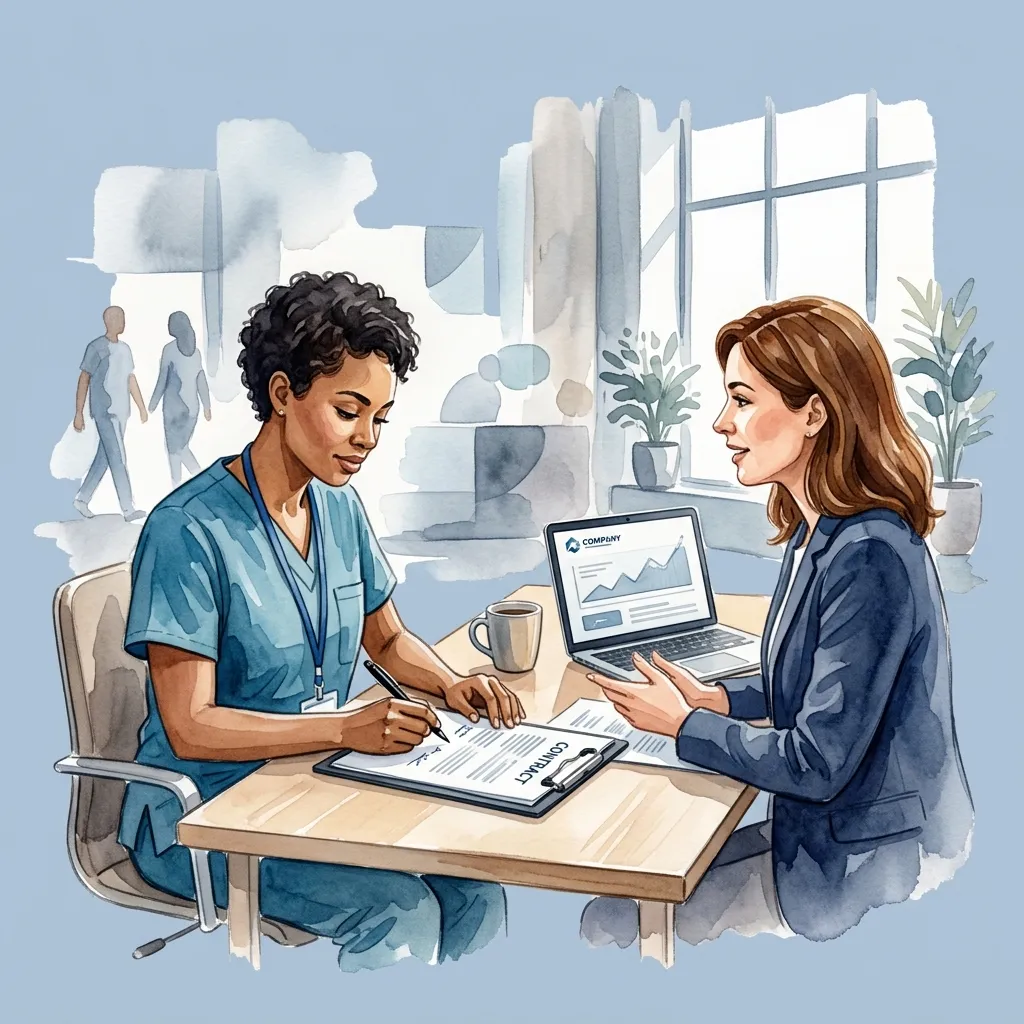
Contract Positions in South Carolina (1)
View All Jobs →Top Employers
- UHS of Delaware1
Contract Tips
- •Negotiate contract length, extension clauses, and cancellation terms
- •Work with reputable staffing agencies for protection
- •Maintain your own benefits (health insurance, retirement)
- •Keep detailed records of all business expenses for tax deductions
- •Build relationships for contract-to-perm conversion opportunities
Why Contract?
Contract PMHNPs earn 20-50% more per hour than permanent staff, with rates of $70-130+/hr.
Contract roles let you evaluate an employer, location, and patient population before converting to permanent.
As a contract worker, deduct home office, travel, equipment, and continuing education from your taxes.
Why Choose Contract
Contract Careers in South Carolina
Contract & temp-to-perm psychiatric NP positions


Premium Rates
Contract PMHNPs earn 20-50% more per hour than permanent staff, with rates of $70-130+/hr.

Try Before You Commit
Contract roles let you evaluate an employer, location, and patient population before converting to permanent.

Tax Advantages
As a contract worker, deduct home office, travel, equipment, and continuing education from your taxes.

State Insights
South Carolina at a Glance
Contract PMHNP positions in South Carolina are typically defined-term W-2 engagements (90 days to 24 months) booked through staffing agencies, paying $90–$150 per hour with agency-provided malpractice. Distinct from 1099 independent contracting, contract roles preserve employer payroll-tax handling and often include short-term health coverage. South Carolina grants restricted practice authority requiring physician supervision, and the state's cost of living near the national average (index 100) directly shapes PMHNP compensation expectations. Top metros in South Carolina are not currently federally designated mental health shortage areas, but regional psychiatric demand and reimbursement structure shape compensation. The 1 active postings reflect a smaller pool of openings for PMHNPs in the state.
South Carolina requires PMHNPs to practice under physician supervision with written protocols.